Dr. Hossam Abu Safiya, Director of Kamal Adwan Hospital in northern Gaza, appeared via video link before the Israeli Supreme Court on 10 June 2026—visibly handcuffed inside a holding cell.
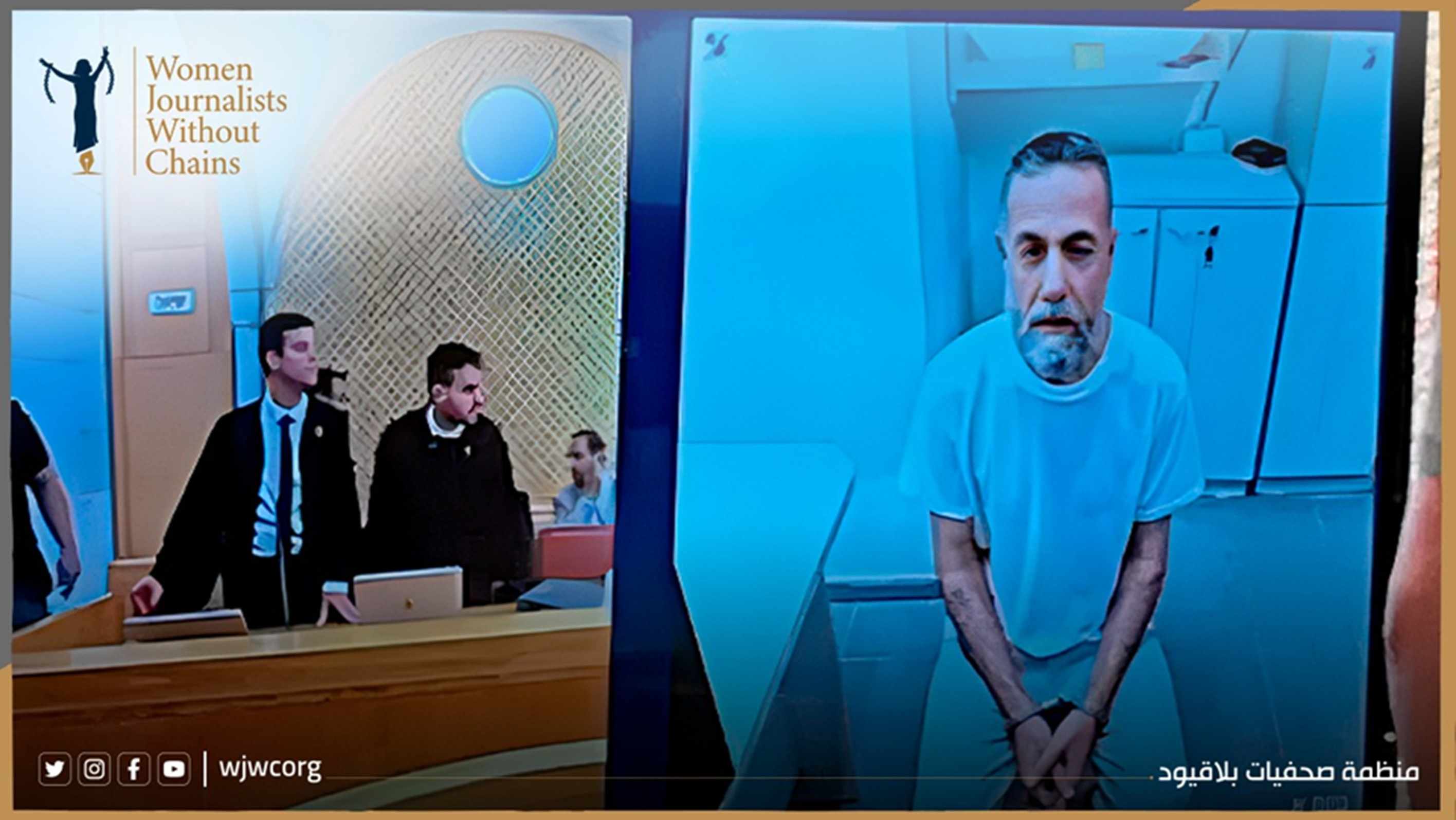
Dr. Hossam Abu Safiya, Director of Kamal Adwan Hospital in northern Gaza, appeared via video link before the Israeli Supreme Court on 10 June 2026—visibly handcuffed inside a holding cell.
Ongoing violations against Palestinian journalists, writers, and media professionals have escalated as Israeli authorities intensify measures to silence Palestinian voices in the West Bank. This statement stands in absolute solidarity with Palestinian writer and political analyst Dr. Bilal Shobaki. After midnight on Sunday, June 7, 2026, a large Israeli military force raided Dr. Shobaki's residence in Ramallah, arrested him, and moved him to an undisclosed location. Dr. Shobaki, who serves as the Head of the Political Science Department at Hebron University, remains in detention.
Since the beginning of 2026, dozens of violations in the West Bank have been documented, including arrests and detentions, summons and interrogations, bans on press coverage, the firing of stun grenades and tear gas at journalists, physical assaults, confiscation and destruction of equipment, as well as expulsion orders from Jerusalem and Al-Aqsa Mosque.
The occupation authorities' policy toward the media reflects a systematic use of laws to criminalize Palestinian journalistic, cultural, and national work in Jerusalem, and demonstrates a deliberate effort to exclude the Palestinian narrative from the public sphere.
Illustrative Cases Recorded in May 2026
|
Date |
Incident |
Violation |
|
25 May |
Journalist Anas Hawari arrested after Israeli forces raided his home late at night in Sebastia, northwest of Nablus. His phone and computer were confiscated before he was taken to an unknown location. On 1 June, Israeli police barred his defense lawyer from visiting him at the interrogation center, while his family and attorney were denied any information about his detention or charges. |
Arbitrary arrest; denial of access to counsel; enforced disappearance |
|
23 May |
Israeli forces prevented photographer Amer Shaloudi, journalist Louay Al-Saeed, Anadolu Agency photographer Wissam Hashlamoun, Reuters photographer Mousa Al-Qawasmi, Xinhua photographer Maamoun Wazwaz, and journalist Musab Shawar from covering a settlers' march in Hebron's Old City. |
Obstruction of press coverage; denial of journalistic access |
|
17 May |
An Israeli court extended the house arrest of Jerusalemite journalist Bayan Al-Jaaba. She was stopped by police, fined, and had her car license revoked after leaving home to attend her trial session. Al-Jaaba has been under house arrest since last year, prohibited from using social media, and compelled to attend repeated court hearings. |
Prolonged arbitrary detention; restriction of movement and expression |
|
6 May |
Journalist Rami Al-Khatib was banned by Israeli occupation police from entering Al-Aqsa Mosque for six months due to his coverage and documentation of events there. |
Expulsion order; restriction of press access to religious sites |
|
3 May |
Journalist Islam Amarna was arrested after Israeli forces forcibly broke into her family home in Bethlehem late at night, before transferring her to an undisclosed location. |
Arbitrary arrest; home raid; enforced disappearance |
Systematic Violence and Land Confiscation
The state of repression in the occupied West Bank coincides with a series of measures carried out by Israeli occupation authorities targeting Palestinian lands, including land confiscation and approval of new settlements—constituting a flagrant violation of international law and relevant United Nations resolutions.
In mid-February 2026, Prime Minister Benjamin Netanyahu's government approved a sweeping plan to "settle" lands in the occupied West Bank and convert large areas of Palestinian territory into "state property of the occupation," paving the way for imposing sovereignty. This has been described as the most dangerous step since 1967.
The plan relies on procedures that allow confiscation of Palestinian lands if owners fail to prove ownership under complex criteria requiring Ottoman, British, and Jordanian documents, inheritance chains, and official maps. In practice, Palestinians face immense difficulties in meeting these requirements, given restricted access to records and the fact that the supervising authority is the occupation itself.
Escalating settler violence against Palestinians in the West Bank has also been warned of. Human rights reports indicate that since October 2023, at least 1,080 Palestinians—including fighters and a large number of civilians—have been killed by Israeli soldiers or settlers. These attacks have also involved looting homes, destroying farms, damaging crops, and stealing property and livestock.
Since the beginning of 2026, 15 Palestinians, including children, have been killed by settler militias in the West Bank, according to the Wall and Settlement Resistance Commission. These crimes reflect an official policy of arming settlers and authorizing them to use lethal force against Palestinian civilians, in the absence of genuine accountability.
Targeting the Media Space
The Israeli Minister of Defense recently signed an order banning several Palestinian media platforms, sparking immediate and widespread condemnation. This decision carries grave implications, as it goes beyond shutting down outlets to provide direct cover for security and military agencies to target and pursue media workers.
The measure targets what remains of a free media space, aiming to silence the Palestinian voice and block information from reaching both local and international audiences.
Israeli occupation authorities also extended the closure of Al Jazeera's office in Ramallah for 90 days—for the twelfth time—under the so-called "Al Jazeera Law," passed in May 2024 by Netanyahu's government.
Israeli forces have killed at least 263 journalists, media workers, and their family members in Gaza since 7 October 2023, including after the announcement of a ceasefire. The occupation authorities are deliberately pursuing a policy to obscure evidence of genocide and restrict field documentation of atrocities against Palestinian civilians.
In this context, Israel's Supreme Court granted Netanyahu's government an additional delay regarding the entry of independent journalists into Gaza. This ruling exposes the integrated role of occupation institutions in providing legal cover for government policies, serving to isolate Gaza from the world and prevent documentation of genocide.
According to data from the Palestinian Ministry of Health in Gaza, Israel has killed approximately 978 Palestinians since the ceasefire of 10 October 2025, in addition to 782 documented retrievals of bodies during the same period. Daily statistics from the Ministry further show that between 7 October 2023 and 9 June 2026, the number of Palestinians killed reached 72,988, with bodies delivered to hospitals. Rescue teams remain unable to reach many victims trapped under rubble or on roads due to relentless bombardment and direct targeting of relief crews.
Breach of International Covenant
Arbitrary arrests targeting Palestinian journalists, writers, and academics—alongside night raids on homes, detention of media workers, and denial of communication with lawyers and families—constitute a flagrant violation of the Fourth Geneva Convention, particularly its provisions on the protection of civilians in occupied territories. These practices also represent a direct breach of Article 19 of the International Covenant on Civil and Political Rights, which guarantees the right to freedom of opinion and expression, including the right to seek, receive, and impart information without interference.
Restrictions on press coverage, denial of access to event sites, closure of media institutions, and bans on Palestinian platforms amount to a pattern of systematic collective punishment against Palestinian media, designed to impose a comprehensive blackout on violations committed against Palestinian civilians.
Targeting journalists during fieldwork also clearly contravenes UN Security Council Resolution 2222 on the protection of journalists in conflict zones, which underscores the obligation to ensure their safety and prohibits attacks or obstruction of their professional duties.
Institutional Position
The systematic targeting of Palestinian journalists, writers, and media professionals—through arbitrary arrests, night raids, expulsion orders, and the closure of media platforms—constitutes more than a violation of press freedom; it represents a deliberate strategy to erase the Palestinian narrative from the public sphere. When a state raids the homes of academics, bars lawyers from visiting detainees, and extends the closure of international media offices for the twelfth time, it effectively confesses to the very atrocities it seeks to conceal. The integration of military, judicial, and administrative mechanisms to isolate Gaza from independent documentation, alongside the criminalization of coverage in the West Bank, reveals an institutionalized policy of information control that amounts to complicity in genocide.
Released by:
Women Journalists Without Chains
Geneva, Switzerland —June 9, 2026
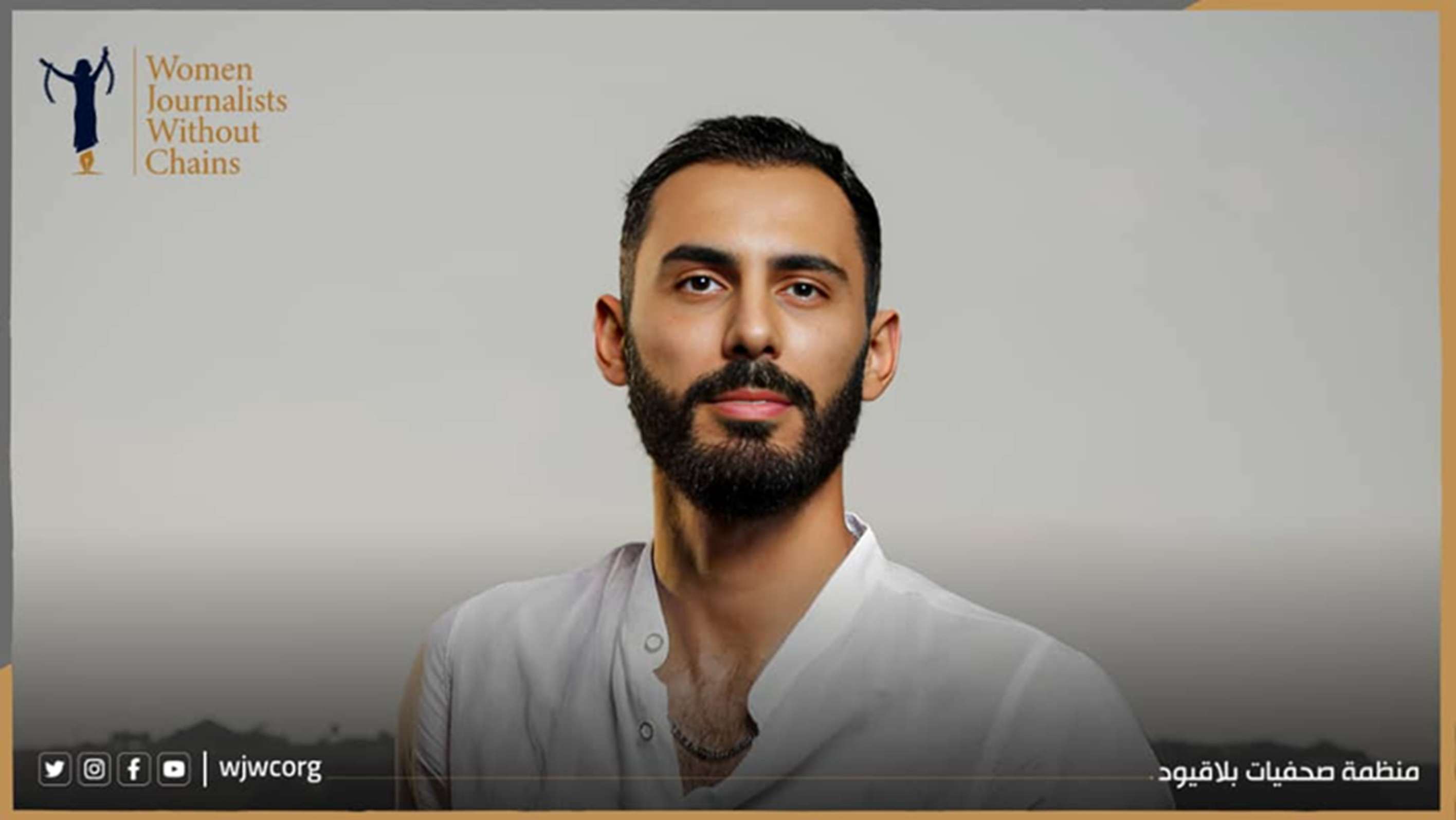
An Israeli airstrike targeting a residential home in the town of Abbasiya, Tyre district, southern Lebanon, claimed the life of Lebanese director Ali Khalil on Thursday, 4 June 2026.
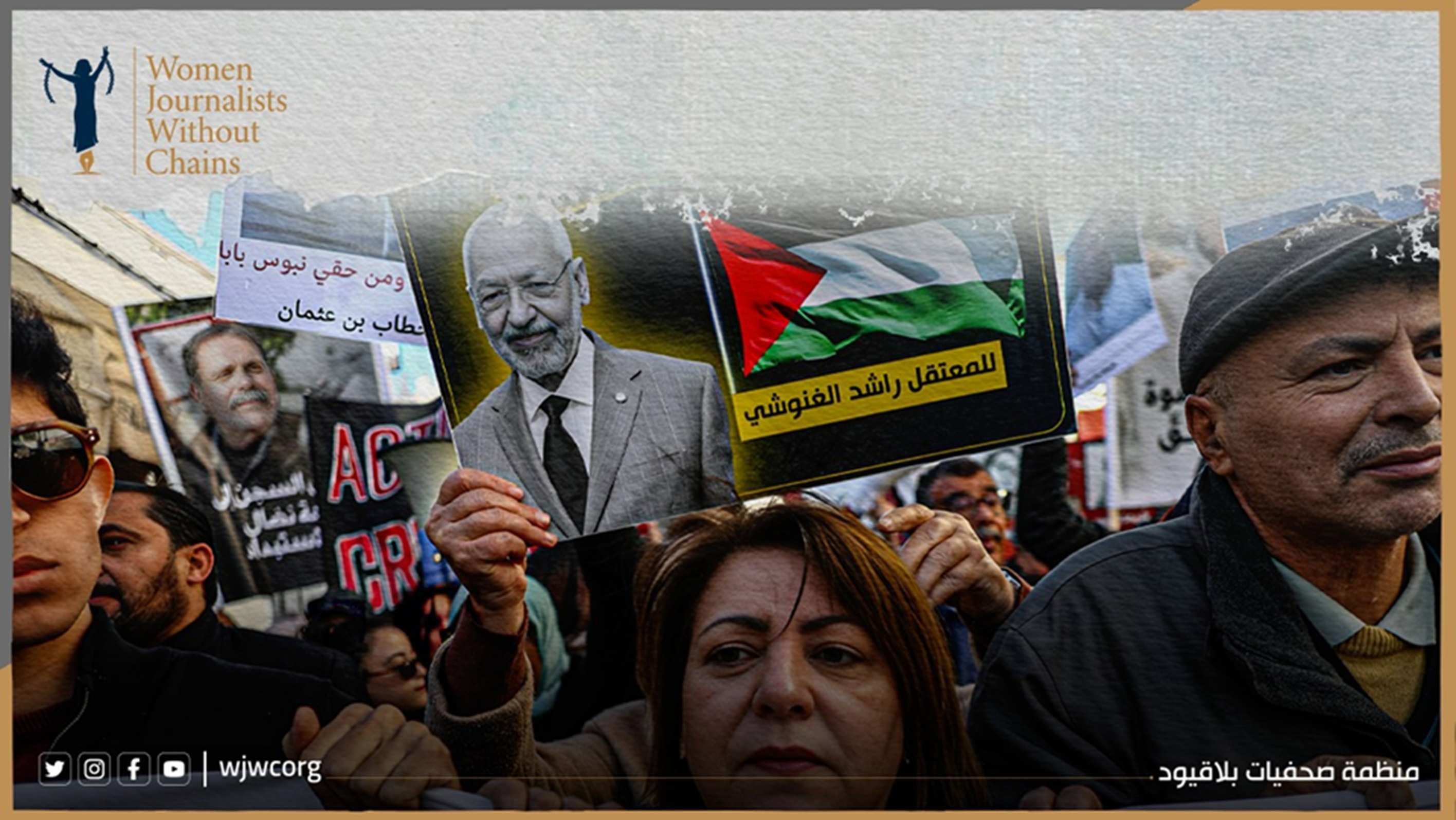
Severe sentences issued by the specialized counter‑terrorism chamber of the Tunis Court of First Instance in the case widely known as the “Secret Apparatus of Ennahda Movement” have sparked widespread condemnation. The verdicts included a life sentence plus 30 years against former Parliament Speaker and Ennahda Movement leader Rached Ghannouchi (aged 84), alongside other harsh sentences targeting a number of political leaders and former officials.
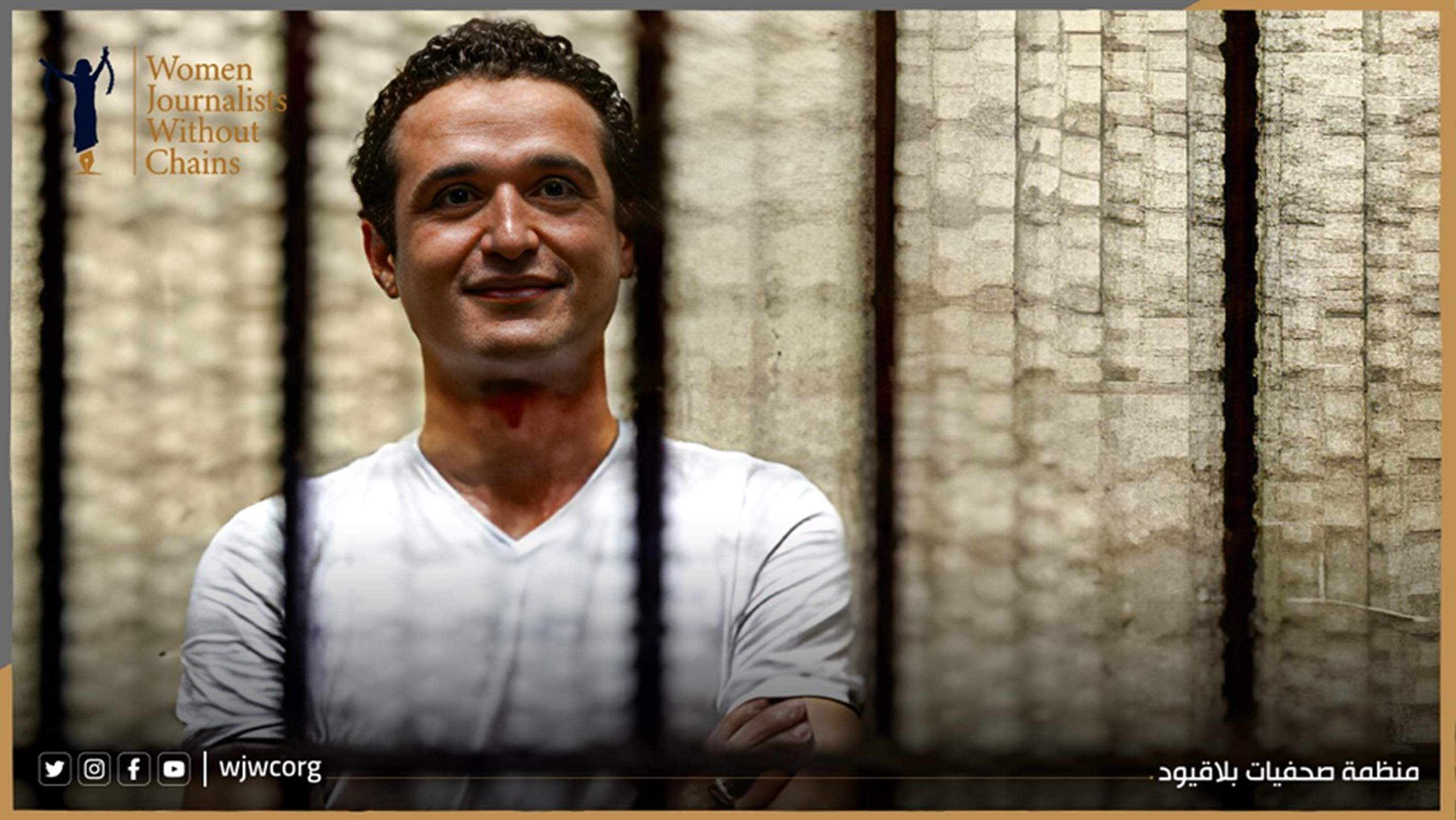
The sentencing of writer and political activist Ahmed Douma to one year in prison with labor by an Egyptian court on 3 June 2026 has been strongly condemned. The verdict, delivered by the New Cairo Misdemeanor Court on charges related to an article addressing detention conditions inside Egyptian prisons, forms part of an ongoing campaign of repression targeting journalists, activists, and government critics.
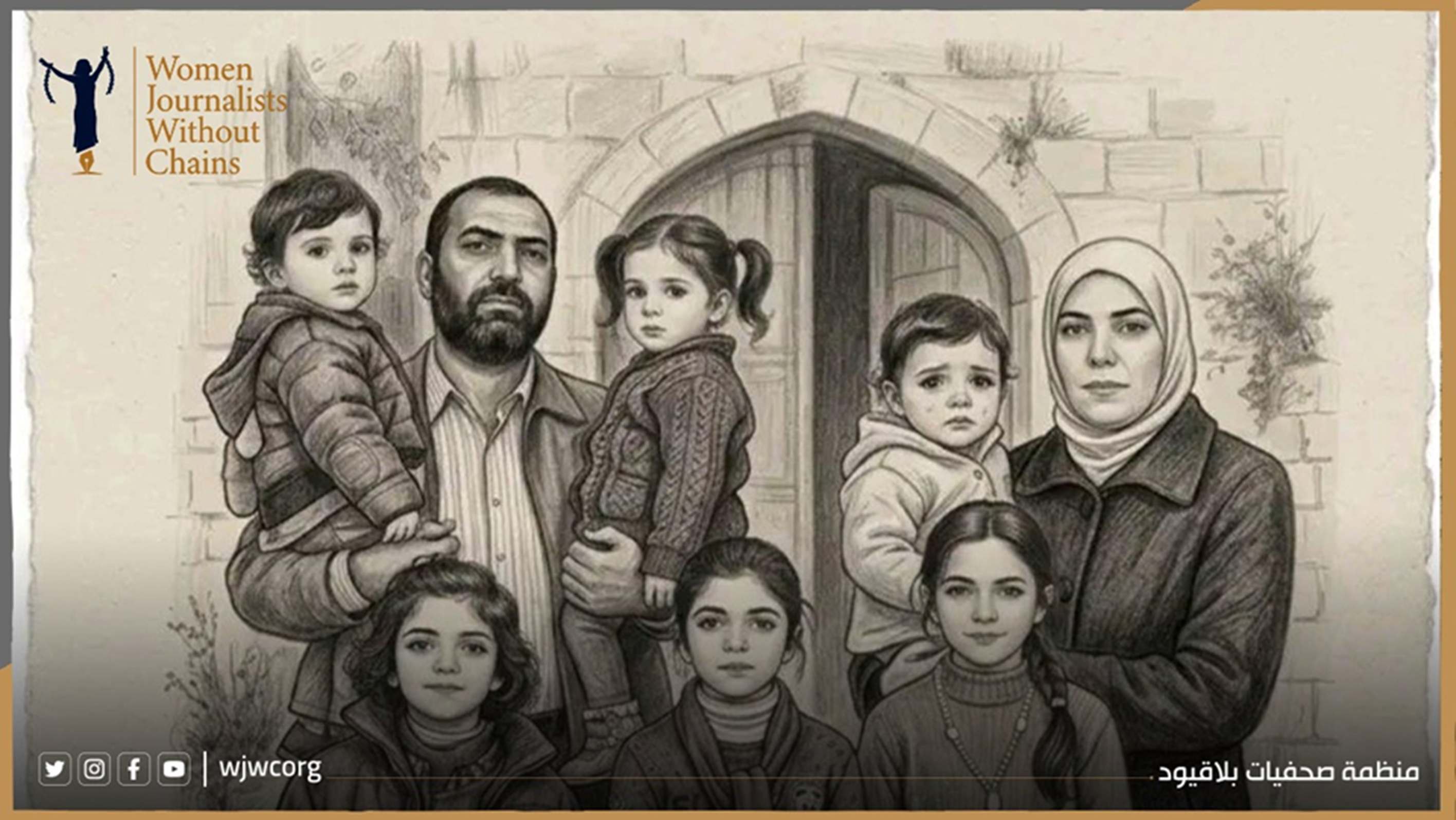
The confirmation of the extrajudicial execution of six children belonging to Dr. Rania al‑Abbasi—Syrian dentist, national chess champion, and mother—has drawn profound condemnation and renewed urgency from Women Journalists Without Chains (WJWC). Video evidence disclosed during official investigations, cross‑referenced with materials linked to the accused officer known as the “Butcher of Tadamon”, has ended thirteen years of enforced disappearance and confirmed the unlawful killing of her children: Dima (13), Intisar (12), Najah (11), Alaa (8), Ahmad (6), and Layan (1).
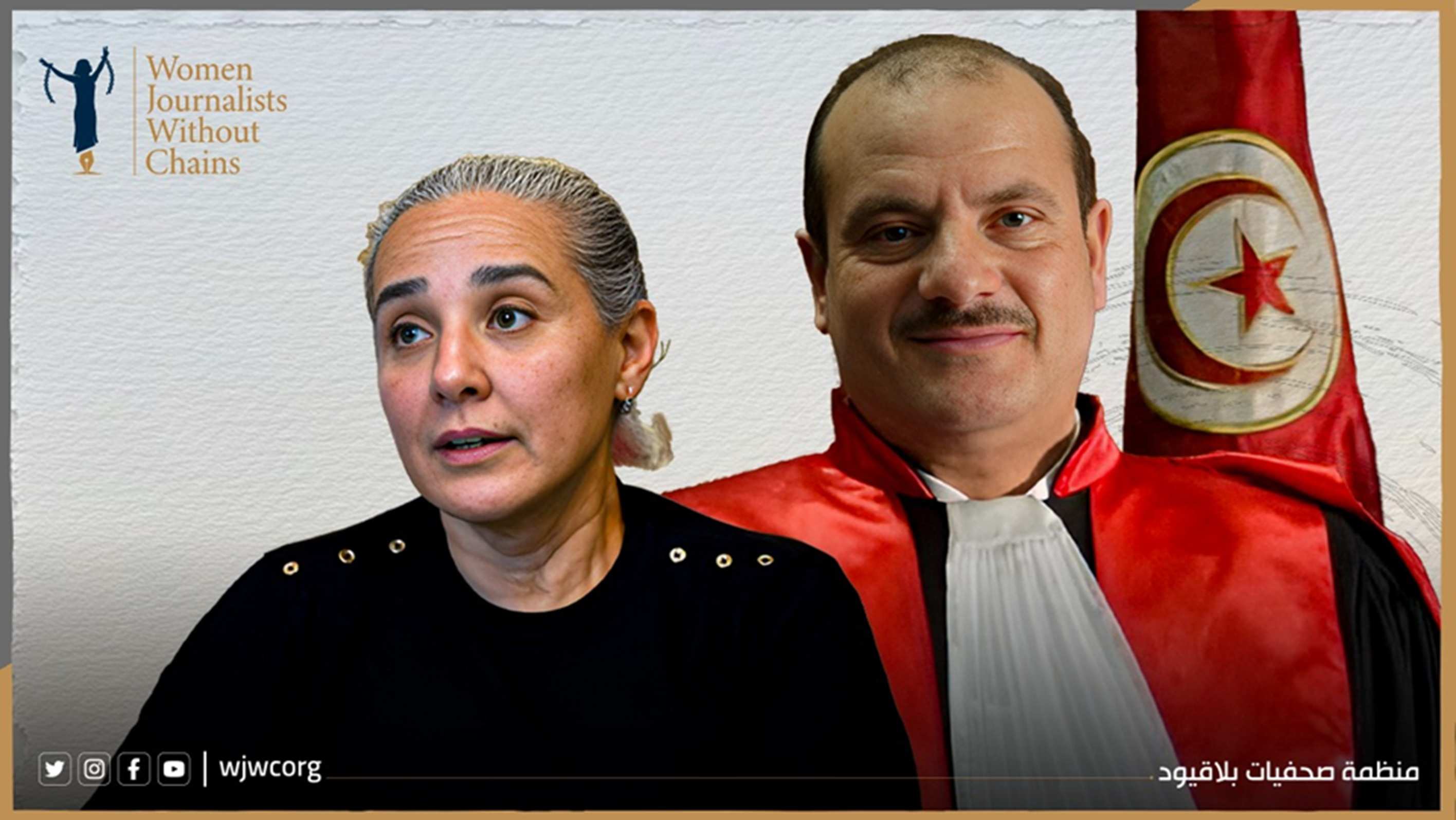
The dangerous escalation of repression by Tunisian authorities against judges, lawyers, and independent judicial voices has drawn strong condemnation from Women Journalists Without Chains (WJWC).
Dr. Hossam Abu Safiya, Director of Kamal Adwan Hospital in northern Gaza, appeared via video link...
Ongoing violations against Palestinian journalists, writers, and media professionals have...
An Israeli airstrike targeting a residential home in the town of Abbasiya, Tyre district, southern Lebanon,...