
Wjwc News
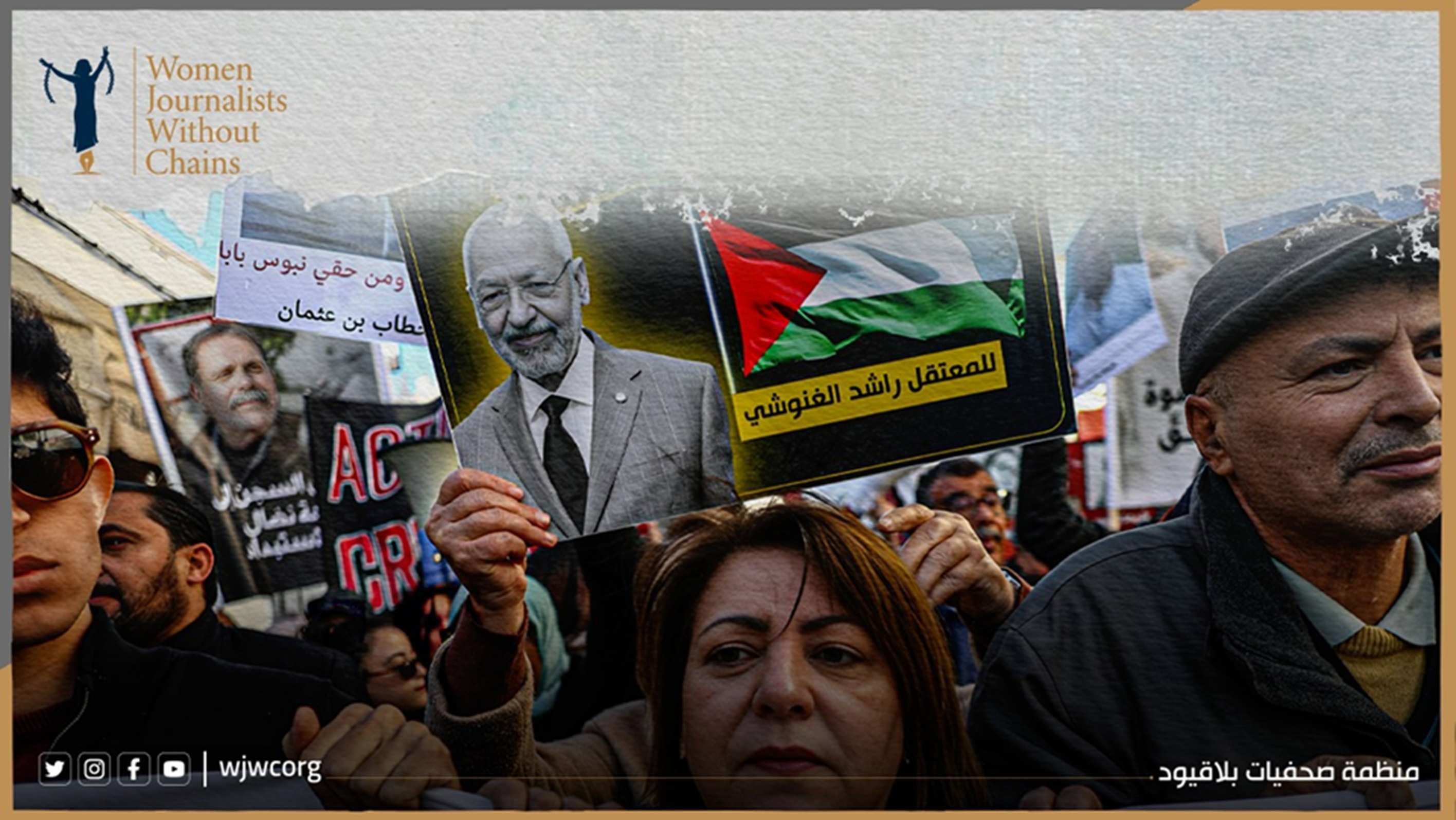
Tunisia: Ghannouchi Verdict Highlights Assault on Justice
Severe sentences issued by the specialized counter‑terrorism chamber of the Tunis Court of First Instance in the case widely known as the “Secret Apparatus of Ennahda Movement” have sparked widespread condemnation. The verdicts included a life sentence plus 30 years against former Parliament Speaker and Ennahda Movement leader Rached Ghannouchi (aged 84), alongside other harsh sentences targeting a number of political leaders and former officials.
The nature of these penalties raises serious concerns regarding their repercussions on the political and human rights landscape in Tunisia. Cases of a political character require the highest standards of judicial independence, fair trial guarantees, and defense rights.
These verdicts come within a context of mounting human rights concerns over public freedoms and the independence of judicial institutions, amid prosecutions that have targeted a number of politicians, journalists, lawyers, and activists in recent years.
Counter-terrorism and national security must not be pursued at the expense of fundamental fair trial guarantees or rights protected under the Constitution and international human rights conventions, including the rights of defendants to defense, the presumption of innocence, and judicial independence.
In this context, Tawakkol Karman, Chair of Women Journalists Without Chains and Nobel Peace Prize Laureate, considered that the successive sentences issued against Rached Ghannouchi represent an extension of the democratic regression Tunisia has witnessed since 2021, reflecting the continued narrowing of public freedoms and political opposition.
She praised Ghannouchi’s intellectual and political role in defending the values of freedom, democracy, pluralism, and the peaceful transfer of power, stressing that resorting to prisons and judicial prosecutions to address political disputes does not contribute to overcoming Tunisia’s crises, but rather threatens the gains related to freedoms, the rule of law, and political pluralism.
Humanitarian and Health Concerns
The critical health conditions of several detainees—foremost among them 84-year-old Rached Ghannouchi—demand immediate attention, underscoring the urgent necessity to respect humanitarian and health considerations in accordance with international standards for the treatment of prisoners.
Institutional Position
The sentences handed down in the “Secret Apparatus” case mark a serious departure from the principles of justice. They undermine judicial independence, erode fair trial guarantees, and deepen Tunisia’s democratic regression. Resorting to punitive measures in disputes of a political nature does not resolve national crises; it entrenches repression, restricts pluralism, and weakens public trust in the rule of law. Immediate review of these proceedings is essential to ensure compliance with constitutional safeguards and international human rights standards.
Demands Aligned with International Human Rights Principles
|
Demand |
International Legal Principle |
|
Guarantee the independence of the judiciary and ensure all fair trial guarantees are upheld |
The Right to a Fair Trial and Judicial Independence (UDHR Art. 10; ICCPR Art. 14; UN Basic Principles on the Independence of the Judiciary) |
|
Respect the right to defense and ensure the presumption of innocence is observed in all proceedings |
The Right to Defense and Presumption of Innocence (ICCPR Art. 14(2)–(3); UN Guidelines on the Role of Prosecutors) |
|
Review procedures affecting the exercise of fundamental rights and freedoms to align with Tunisia's international human rights obligations |
The Obligation to Respect and Ensure Rights (ICCPR Art. 2; Vienna Convention on the Law of Treaties) |
|
Create a legal and political environment ensuring political pluralism, freedom of opinion and expression, and reinforcing trust in justice institutions as foundational pillars of the rule of law |
The Right to Freedom of Expression and Political Participation (UDHR Arts. 19, 21; ICCPR Arts. 19, 25) |
|
Observe humanitarian and health considerations for elderly and ailing detainees in accordance with international standards |
The Right to Humane Treatment and Health in Detention (ICCPR Art. 10; UN Standard Minimum Rules for the Treatment of Prisoners — Nelson Mandela Rules, Rules 24–35) |
Women Journalists Without Chains
Geneva, Switzerland — June 5, 2026