
Wjwc News
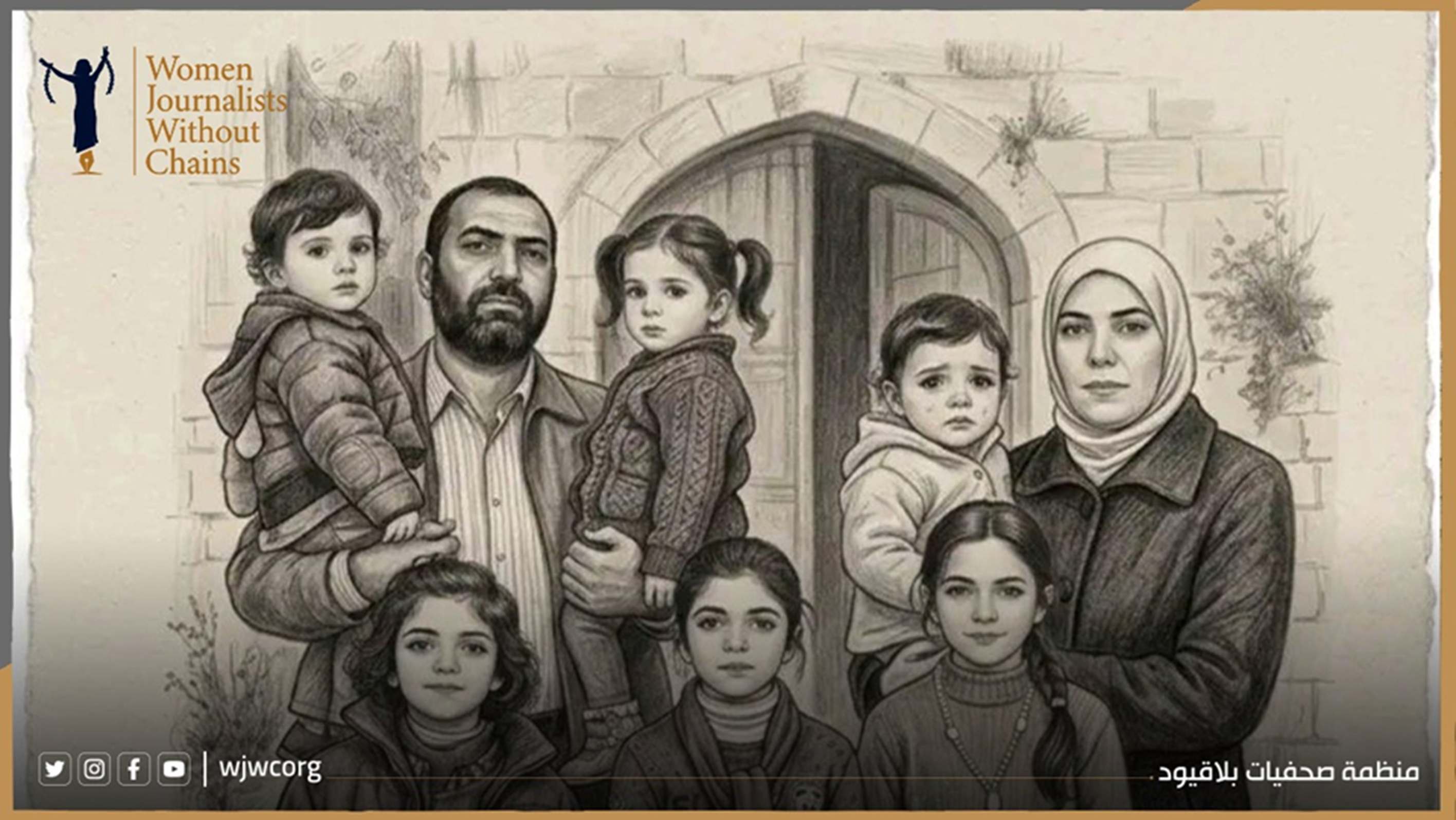
Justice for Rania al‑Abbasi — End Syria’s Enforced Disappearances
The confirmation of the extrajudicial execution of six children belonging to Dr. Rania al‑Abbasi—Syrian dentist, national chess champion, and mother—has drawn profound condemnation and renewed urgency from Women Journalists Without Chains (WJWC). Video evidence disclosed during official investigations, cross‑referenced with materials linked to the accused officer known as the “Butcher of Tadamon”, has ended thirteen years of enforced disappearance and confirmed the unlawful killing of her children: Dima (13), Intisar (12), Najah (11), Alaa (8), Ahmad (6), and Layan (1).
WJWC expresses its deepest sorrow and unwavering solidarity with the al‑Abbasi family, and with the thousands of Syrian families still awaiting truth about loved ones disappeared by the Assad regime.
The al‑Abbasi Tragedy: A Case Study in Systematic Erasure
The ordeal of the al‑Abbasi family began in March 2013, when regime security forces arrested Dr. Abdul Rahman Yassin, Rania’s husband, from their Damascus home. Days later, Rania herself was detained alongside her six children and her dental clinic assistant. All contact was severed until the recent disclosure of execution footage.
Dr. Rania al‑Abbasi was widely known in Damascus’s Dummar neighborhood for her compassion and support to those in need. Her fate, and that of her children, exemplifies the systematic use of enforced disappearance as a tool of state terror under the Assad regime.
Naila al‑Abbasi, Rania’s sister, described the confirmation as “a very difficult and harsh day… I know it is painful for every Syrian, and I can see the anger in the hearts of all honorable Syrians.” She explained that she and her brother Hassan identified the children through video footage showing black plastic strips around their necks and the voice of Amjad Yusuf—the individual filming—declaring: “These are a sacrifice for the soul of the martyr Naim al‑Yusuf.”
Hassan al‑Abbasi confirmed that the children were wearing the same clothes visible in old family photographs, their features unmistakable, with black ties visible around the necks of some. The family has appealed for the footage not to be published, out of respect for their grief.
The Scale of Enforced Disappearance in Syria
Since the fall of Bashar al‑Assad’s regime on 8 December 2024, approximately 24,000 detainees have been released—many held for decades, some dating back to the era of Hafez al‑Assad. This figure represents merely 15% of the estimated 160,000 detainees and forcibly disappeared persons, underscoring the vast and still unaccounted scale of state abduction.
Mass graves have been uncovered across Syria, including a site in Qutayfah, north of Damascus, extending over an estimated 5,000 square meters. Syrian human rights defenders have indicated this grave may contain up to 100,000 bodies—trenches sealed with removable concrete blocks, corpses placed in plastic bags marked with symbols. The International Commission on Missing Persons (ICMP) has reported up to 66 sites of unidentified mass graves nationwide.
Tawakkol Karman, Chair of Women Journalists Without Chains, stated: “It is tragic that tens of thousands of Syrian families are enduring unbearable times, torn between the hope of finding their loved ones alive in Assad’s prisons and the shock of the mass graves now being revealed, containing the remains of thousands of unidentified victims.”
Institutional Position
“The al‑Abbasi children were not casualties of war—they were victims of a calculated machinery of extermination. Their execution, filmed and filed away for thirteen years, reveals the systematic cruelty of a regime that treated the murder of children as state protocol. We will not permit this atrocity to be archived and forgotten.”
— Women Journalists Without Chains
Demands Aligned with International Human Rights Principles
|
Demand |
International Legal Principle |
|
Launch transparent, comprehensive investigations into the al‑Abbasi case and all incidents of enforced disappearance, ensuring accountability without impunity |
The Right to Truth and Justice (ICCPR Art. 2(3); UN Convention Against Torture Art. 12; UN Principles on Combating Impunity) |
|
Expedite establishment of a national registry for the disappeared and forcibly detained, guaranteeing families’ right to access information |
The Right to Know the Fate of Missing Relatives (ICCPR Art. 17; UN Declaration on the Protection of All Persons from Enforced Disappearance Art. 18) |
|
Secure mass graves and former detention sites from tampering; enable forensic teams and international experts to conduct examinations |
The Right to Adequate and Effective Remedy (ICCPR Art. 2(3); Basic Principles and Guidelines on the Right to a Remedy and Reparation) |
|
Provide psychological, legal, and social assistance to families of victims; ensure their participation in transitional justice processes |
The Right to Reparation (Basic Principles and Guidelines on the Right to a Remedy and Reparation; UN Declaration on the Protection of All Persons from Enforced Disappearance Art. 20) |
|
Guarantee prosecution of perpetrators; strengthen efforts to deliver reparations and redress to victims |
The Obligation to Prosecute Grave Violations (Rome Statute; Geneva Conventions; UN Principles on Combating Impunity) |
|
Ensure transitional government cooperates with UN bodies and specialized institutions to document evidence for national and international accountability |
The Right to an Effective Remedy and International Cooperation (UN Declaration on the Protection of All Persons from Enforced Disappearance Art. 17; ICC Statute) |
Released by:
Women Journalists Without Chains
Geneva, Switzerland — June 7, 2026